


Equipment and preparation needed to train for a HYROX from home
Preparing for a HYROX usually starts with a mix of motivation and doubts. It’s trendy, someone you know has already signed up, or you’re looking for a different challenge. You start researching… and suddenly it seems like you need a whole box, sleds, giant bags, and equipment that won’t even fit in the garage.
Breathe.
The reality is much simpler: yes, you can prepare for a HYROX from home if you train what transfers, wisely, without paying high fees, and without setting up a specific gym.
This article was created to help you exactly there: understand what HYROX really demands, what equipment is worth it (and what isn’t), and how to train at home with sessions that resemble the real effort of the event.
Index
- What is HYROX?
- Can you prepare for HYROX at home?
- What HYROX demands (and why it’s important to understand it)
- Don’t train HYROX: train for HYROX
- How to train HYROX at home: EMOMs, blocks, and real fatigue
- HYROX exercises and how to train them at home (with real alternatives)
- Cardio at home: when it comes into play (and which machine to choose)
- Minimum kit vs full kit for training HYROX at home
- What can you set up based on your budget?
- Final checklist
- Frequently asked questions
- Do you have questions?
What is HYROX and why are so many people signing up?
HYROX is a hybrid fitness competition: it combines running with functional training stations, always in the same order. It’s a measurable and highly motivating format because you can compare your time, repeat the experience, and see real improvement.
It’s not CrossFit, not pure running, and not an obstacle race. HYROX rewards those who best manage accumulated effort: running when you’re fatigued and moving loads when you’re out of breath.
Can you prepare for HYROX at home?
The short answer is: yes.
The full answer is: yes, if you train what transfers and have a minimum of useful equipment. Preparing for HYROX isn’t about copying the competition exercise by exercise, but about developing the physical capacities the event will demand.
Can you imagine pushing a sled down your hallway? Don’t worry: it’s not necessary. The important thing isn’t the object, it’s the stimulus.
What HYROX demands (and why it’s important to understand it)
Before talking about equipment, understand what “breaks” you in a HYROX. It’s usually not a single station: it’s the sum of all of them.
In practical terms, HYROX asks you to:
- Strength–endurance: move loads when you’re already tired (lunges, pushes, carries, wall balls).
- Efficient locomotion: run and move well even when your legs are burning.
- Aerobic base and anaerobic peaks: sustain long effort + “bursts” at stations.
- Fatigue management: keep performing without fully resetting between efforts.
If you train these four things, you are training for HYROX. And yes: you can do it (almost) without leaving home.
The key to HYROX at home: don’t train HYROX, train for HYROX
One of the most common mistakes is obsessing over replicating each station exactly. But the real transfer isn’t in “having the official equipment,” it’s in achieving the same type of effort.
This is where dumbbells and kettlebells become the key piece: they’re versatile, scalable, and let you cover the patterns that appear in HYROX (squat, hinge, push, pull, load, and carry).
And watch out for this, because it’s what really makes the difference: HYROX isn’t just about running fast. It’s about running tired. Running a 4:00/km pace fresh isn’t the same as trying to hold that pace after burpees, lunges, or thrusters.
How to train HYROX at home: EMOMs, blocks, and real fatigue
If your training lets you “reset” too much, it doesn’t resemble HYROX. That’s why formats that force you to keep your body accelerated work so well: EMOMs (Every Minute On the Minute), short intervals, and combined blocks.
These formats teach something very specific: building strength with a high heart rate and moving again when your legs already feel heavy. Exactly what will happen on race day.
Examples of “very HYROX” stimuli (at home or outdoors)
EMOM 20’ (alternating): 10 burpees + 12 goblet squats / 45” hard cardio (airbike/rowing/smartbike).
Block 3 rounds: 6’ high-pace cardio + 40 loaded lunges + 20 thrusters (rest 2’).
Intervals: 6× (2’ hard cardio + 1’ farmer carry or loaded marches). Rest 1’.
Important: this isn’t about “doing it perfectly” and resting for two minutes. It’s about managing effort and keeping going when you don’t feel like it.
HYROX exercises and how to train them at home (with real alternatives)
In competition, there are specific stations, but at home you need realistic solutions. Below is a practical guide with alternatives that maintain the stimulus (and that you can do with common home gym equipment).
Note: if you train at home without a sled, the goal is to replicate the feeling of pushing/pulling: continuous tension, burning legs, and a high heart rate. We’ll do this with loads, movements, and similar patterns.
1) SkiErg (1,000 m) → home alternative
If you have a SkiErg, perfect. If not, the stimulus you’re looking for is sustained and demanding arm + core cardio.
- Best alternative: rowing (1,000–1,500 m at a steady high pace).
- Machine-free alternative: 4–6’ of easy/steady burpees (without burning out) + 2–3’ rest and repeat.
2) Sled Push → sled-free alternative
What kills here is the leg push in fatigue. Without a sled, focus on quads + continuous tension.
- Option A: thrusters with dumbbells/kettlebell (4×15–20, short rest).
- Option B: heavy goblet squat (5×12–15) + 30–45” intense cardio between sets.
- Option C (if you have a barbell): front squats or high bar squats in mid ranges (6×8–10).
3) Sled Pull → sled-free alternative
Back, grip, and legs “pulling” the load dominate here. At home, replicate with pull + load + movement.
- Option A: heavy farmer carry (6–10 sets of 20–40 m).
- Option B: dumbbell/kettlebell row (4×12–15 per side) + loaded marches.
- Option C: moderate deadlift (5×8) + 1’ intense cardio.
4) Burpee Broad Jumps → home alternative
If you can’t jump due to space, no problem: the stimulus is power + heavy breathing.
- Option A: “normal” burpees (timed: 4×2’ at steady pace).
- Option B: burpees + step ups (if jumping isn’t possible).
- Option C: burpees + 10–15 m run/airbike/row (quick transition).
5) Row (1,000 m) → home version
If you have a rower, it’s exactly the same. If not, use a machine that lets you maintain a similar effort.
- Best alternative: airbike or smartbike (2’–3’ hard for every “1,000 m” of rowing, depending on level).
- Machine-free alternative: running intervals (5×400 m at “hard” pace with short rest).
6) Farmer Carry → home version
This is one of the easiest to replicate: you just need weight and a hallway/space.
- With dumbbells: 6–12 sets of 20–40 m, heavy.
- With kettlebells: same, and if you want to make it harder: one side (suitcase carry).
7) Sandbag Lunges → bag-free alternative
The stimulus here is brutal: lunges when the legs are already at their limit. At home, it’s easy.
- Option A: lunges with kettlebell goblet (3–5×20–30 steps).
- Option B: lunges with dumbbells (more total load, more transfer).
- Option C: stationary lunges (if you don’t have a hallway) timed: 3×2’.
8) Wall Balls → ball-free alternative
Wall balls are squat + push + forced breathing. Without a ball, the most direct alternative is the thruster.
- With dumbbells: 4×12–20 (short rest).
- With kettlebell: thrusters or push press + squat (if coordination is difficult for you).
The golden rule
If you can’t replicate the exact equipment, replicate the stimulus: burning legs + high heart rate + quick transition. That’s what really prepares you.
Cardio at home: when it comes into play (and which machine to choose)
If you train HYROX at home, there comes a point when you need more than running around the neighborhood. You need a tool that lets you raise your heart rate quickly, control times, and link with strength without endless breaks.
That’s where cardio machines make sense:
- Airbike: high intensity, small footprint, huge transfer to cardiovascular effort.
- Rowing machine: full-body work, low impact, ideal for accumulating fatigue without beating up your legs too much.
- Smartbike: perfect for adding volume, controlling effort, and maintaining quality (especially if you come from cycling or are motivated to train connected).
They don’t replace running, but they’re perfect to simulate the cardiovascular fatigue that then affects everything else. A cardio block, quick transition, and back to strength. That’s HYROX.
Recommended equipment for HYROX
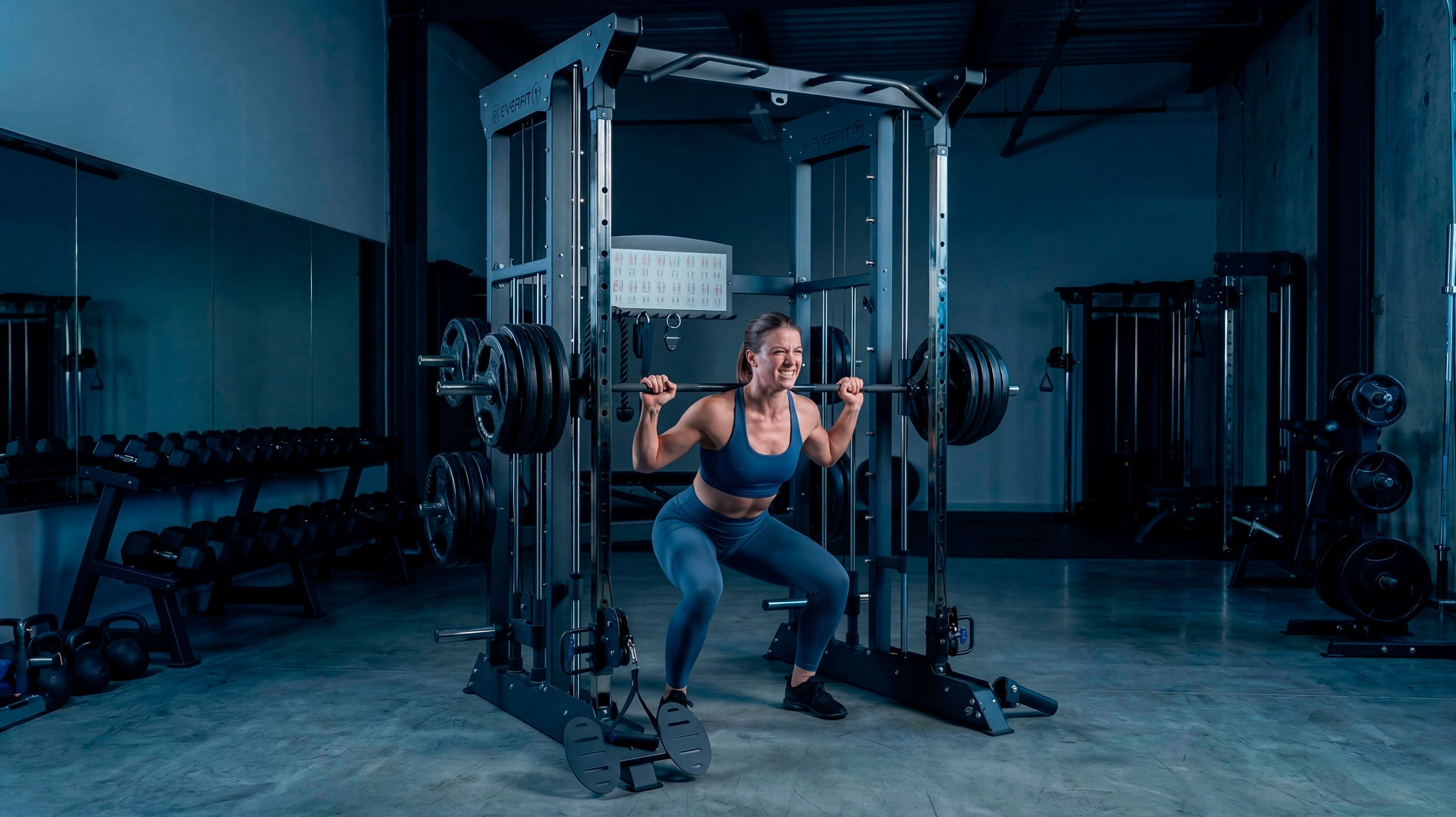
If you want to prepare for HYROX at home, these are the basics with the most transfer: airbikes, rowers, kettlebells, dumbbells, and functional equipment to train hard and smart.
See functional equipment →Minimum kit vs full kit for training HYROX at home
You don’t need to set up a box. But it is important to know what “minimum” really means and what gives you a quality boost.
Minimum kit (the essentials)
Ideal if you have little space or want to start with just the essentials.
- Kettlebell or dumbbells (ideally more than one weight if you can).
- Progressive loading (more weight over time: plates/barbell or more dumbbells/kettlebells).
- Basic cardio: outdoor running + a well-designed interval or EMOM format.
With this, you can work on strength, endurance, and conditioning without any problem. The essential thing is that you can increase load and maintain intensity.
Full kit (when you want to train better)
If you want to take it a step further and train with higher quality, the full kit lets you have sessions very similar to real fatigue.
- Dumbbells and kettlebells of different weights.
- Barbell and plates (for basic strength and real progression).
- One or two cardio machines (airbike, ski or rower, and smartbike if it suits you).
- Useful accessories: mat, rope, floor, etc.
What can you set up based on your budget?
HYROX isn’t prepared by “buying everything.” It’s prepared by training well. But if you’re thinking about setting up your gear, these ranges help you prioritize without overspending.
Up to €500
Functional strength base, complete workouts, little space. Ideal to start without complications: a couple of kettlebells or dumbbells and a well-made plan already give you a lot.
Around €1,000
Strength very well covered, plus comfort and variety. Here you can have more serious progression (more weights, barbell and plates, or a better base) and higher quality combined sessions.
€2,000 or more
Very complete home gym: strength + cardio. Here it makes sense to add one or two cardio machines and a solid strength base to train “properly” without leaving home.
It's not about spending more. It's about spending smarter.
Final checklist before preparing for HYROX at home
Before buying anything, check this:
- Actual space: can you move and do lunges/carries without issues?
- Progression: how will you increase load in 3–6 months?
- Safety: if you use a barbell, do you have a safe environment (rack/supports)?
- Consistency: what equipment will you keep using after the initial motivation fades?
These decisions make the difference between training for two months or maintaining the habit.
FAQs: common questions about training for HYROX at home
Do I need the exact competition equipment?
No. You need the right stimulus, not the exact object. If you replicate the effort (load + heart rate + transition), you’re training what matters.
Can I prepare for HYROX without a box?
Yes, absolutely, if you choose the right equipment and train with formats that resemble the real effort: EMOMs, blocks, and cardio + strength combinations.
Airbike, ski, or rowing?
They all have direct transfer. Airbike if you want quick bursts of intensity and challenge; rowing if you want a full-body workout and to build fatigue with less impact; and ski if you want to work on a less common and complex movement to manage specifically.
Is training at home enough?
Yes, if you’re consistent and train smart. Equipment helps, but what makes the difference is increasing load, maintaining intensity, and learning to move under fatigue.
Still have questions? We're here to help
Everyone trains differently, has a different space, and their own goal. That’s why, beyond the equipment, what matters is how you choose and how you use it.
If you need expert, personalized advice tailored to your training style, our team can help you set up your HYROX preparation with purpose from day one.
Train smart. Progress safely. Enjoy the journey.
Need personalized advice?
We help you choose the equipment that will give you the most transfer based on your space, level, and HYROX goal. No unnecessary purchases.
Contact us →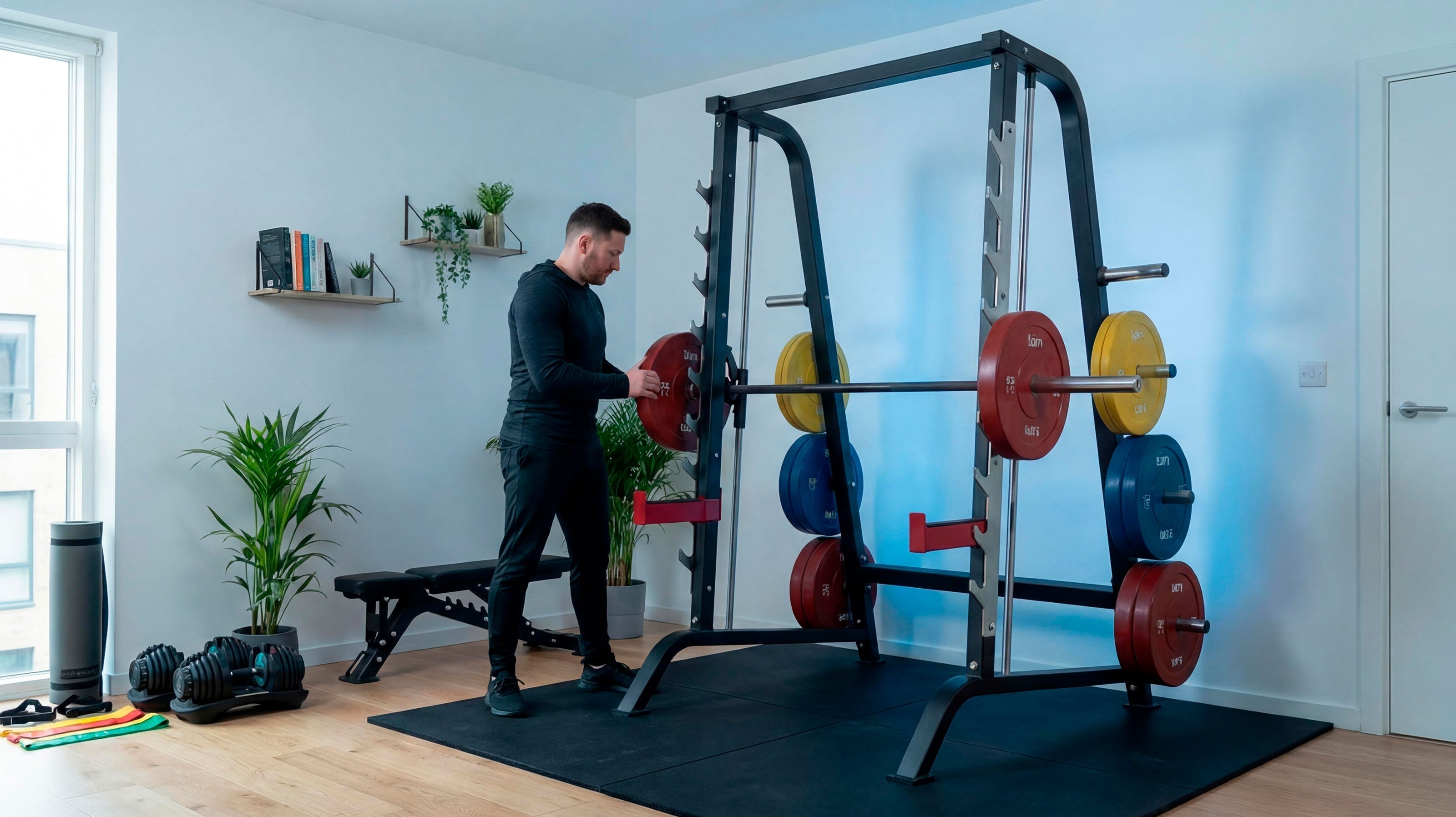

Leave a comment
All comments are moderated before being published.
This site is protected by hCaptcha and the hCaptcha Privacy Policy and Terms of Service apply.